What Lab Values Are Required for Anion Gap Calculation?
What Is the Anion Gap?
The anion gap is a calculated value that helps healthcare providers interpret electrolytes and evaluate acid-base balance. It is never a lab test by itself. Instead, it is a diagnostic aid obtained from routine blood test results, usually from a standard serum chemistry or electrolyte panel.
At its core, the anion gap approximates the difference between the major measured positive and negative ions in the blood. Because some ions are not directly measured, the result can provide clues about anion concentration and the presence of unmeasured anions. That makes it especially valuable in the evaluation of an acid-base disorder, particularly when metabolic acidosis is suspected.
An anion gap calculator is simply a medical calculator that performs this calculation for you once the relevant lab values are entered. The result can help with clinical interpretation, but it should always be considered alongside symptoms, the full metabolic panel, and other laboratory findings.
Which Lab Values Does an Anion Gap Calculator Need?
To calculate the anion gap, an anion gap calculator https://anion-gap-guide100.trexgame.net/how-to-calculate-anion-gap-in-meq-l typically requires three core lab values: sodium, chloride, and bicarbonate. They are often listed as serum sodium, serum chloride, and serum bicarbonate on a serum chemistry report.
These three measurements come from routine blood chemistry testing and are often included in a basic metabolic panel or comprehensive metabolic panel. Most of the time, the calculator uses the same numbers you would see on the lab report, so there is no special test beyond the standard blood draw.
This is what each input contributes:
- Sodium: the primary measured cation used in the calculation.
- Chloride: the chief measured anion that is subtracted from sodium.
- Bicarbonate: a key buffer that reflects acid-base status and is also subtracted in the standard formula.
Since these are common measurements in a metabolic panel, the anion gap is easy to compute from everyday laboratory data. In practical terms, the calculator uses the values already available from a routine blood test, which makes it a fast way to assess electrolyte balance and possible disturbances in acid-base physiology.
How the Anion Gap Formula Works
The usual anion gap formula is:
Anion gap = Sodium - (Chloride + Bicarbonate)This calculated result uses the measured ions existing in the blood, typically expressed in mEq/L. The formula illustrates the fact that the body keeps electrical neutrality, meaning positively charged and negatively charged substances must balance. However, not all ions are tested in routine analysis.
That is why the anion gap is helpful. It aids in estimate the quantity of electrically charged ions not directly covered in the basic lab set. These hidden components are often referred to as unmeasured anions. When the gap shifts, it can suggest that something is affecting acid-base physiology or altering the balance of measured and unmeasured substances.
A calculator makes this more straightforward by doing the arithmetic immediately. Still, understanding the calculation formula matters because the result depends entirely on the accuracy of the input values. If the sodium level, chloride level, or bicarbonate level is wrong, the anion gap will also be inaccurate.
Some clinicians also use a alternate version of the formula that includes potassium, but the standard approach does not require it. The basic version is the one most commonly used in routine clinical interpretation.
Why Albumin May Matter in Result Interpretation
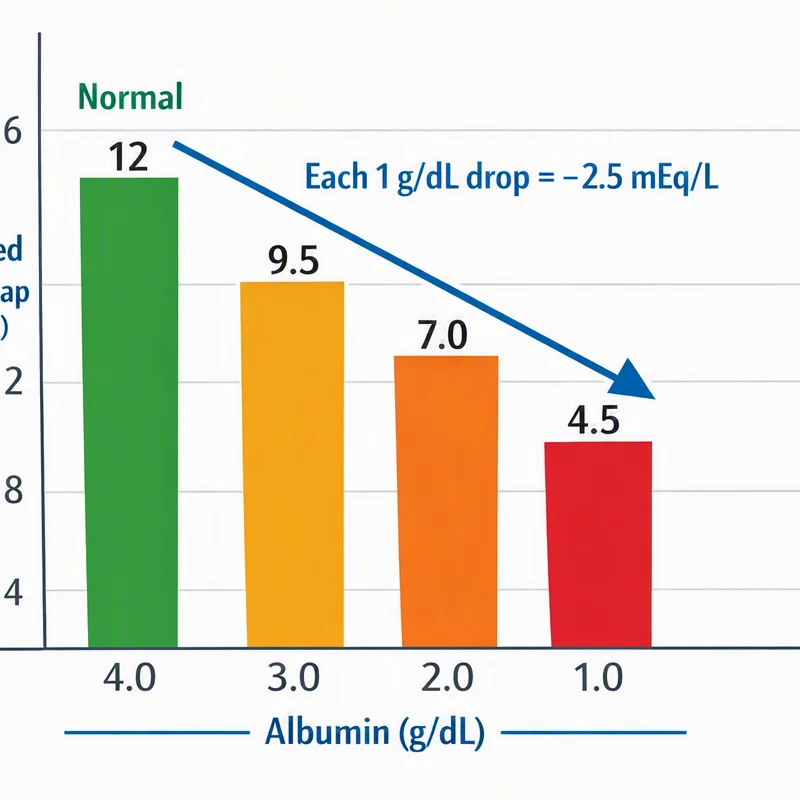
While albumin is not part of the standard anion gap formula, it can noticeably affect how the result is interpreted. Albumin is a negatively charged protein and a major contributor to the body’s overall electrical balance. When albumin is low, the anion gap may appear lower than expected even if a clinically important acid-base issue is present.
This is why hypoalbuminemia matters. If albumin is reduced, the measured anion gap can underestimate the true burden of unmeasured acids. In that situation, clinicians may consider an albumin-corrected anion gap to arrive at a better estimate of the underlying problem.
The correction is not always required, but it becomes more relevant when the patient has low protein levels, liver disease, malnutrition, inflammation, or critical illness. In those cases, the usual normal range may not reveal the full story.
For that reason, albumin is an important part of clinical interpretation even though it is not one of the three core inputs used by most anion gap calculators. A more complete assessment often includes the lab context, the overall electrolyte balance, and whether the patient may have a masked high anion gap due to low albumin.
What Results Are Considered Normal or Abnormal
The normal anion gap is influenced by the laboratory as well as the analyzer used, so the reference range can vary. Many labs report a standard range that is narrow enough to guide interpretation but still a bit different from one system to another.
As a rule, a result is considered:
- Normal anion gap: inside the lab’s stated reference range.
- High anion gap: higher than the normal range and frequently linked to added unmeasured acids.
- Low anion gap: under the normal range and less common, sometimes due to protein changes or measurement issues.
A high anion gap is often the more important clinically finding because it may indicate a problem with acid handling, acid production, or acid clearance. A low value is usually interpreted more cautiously because it is less often a sign of a primary disease process.
It remains important to compare the result with the lab-specific reference interval and the full clinical picture. The same number may be interpreted differently depending on the patient’s sodium, chloride, bicarbonate, albumin, and overall condition. This is where the medical interpretation of the blood test matters more than the number alone.
Typical Causes of a Elevated Anion Gap
A high anion gap typically suggests a accumulation of acid substances that are not directly measured in the standard panel. This result is frequently seen in metabolic acidosis, especially when the body is making too much acid or cannot clear it properly.
Some of the leading causes consist of:
- Lactic acidosis: occurs when lactate piles up, often in settings of poor oxygen delivery, shock, severe illness, or intense physiologic stress.
- Ketoacidosis: develops when ketones rise, frequently in diabetes, prolonged fasting, or alcohol-related metabolic states.
- Kidney failure: limits the body’s ability to remove acid and can cause retention of unmeasured anions.
These conditions can increase the gap because they add to the amount of acids not included among the standard measured ions. The result may point clinicians toward the correct diagnosis, but it does not identify the cause on its own. Additional testing and clinical context are needed to determine whether the issue is lactic acidosis, ketoacidosis, kidney failure, or another process.
In practice, the anion gap is one part of the broader assessment of metabolic panel results. It helps sort the type of acidosis and determine whether the patient has a metabolic acidosis with an elevated gap or another acid-base pattern entirely.
Frequently Asked Questions
This section answers frequent questions about the anion gap calculator, the necessary lab values, and how different panels affect the result. This information can help you apply an electrolyte panel more confidently and understand what the numbers mean.
Do You Need Potassium to Calculate It?
Generally, no. The standard formula for the anion gap uses sodium, chloride, and bicarbonate only. Potassium is included in some versions of the calculation, creating a modified anion gap, but that is not the most common formula in routine clinical use. Most anion gap calculator tools rely on the standard formula unless they specifically say otherwise.
Can an Anion Gap Be Calculated from a Basic Metabolic Panel?
Yes. A basic metabolic panel usually includes the values needed for the calculation: sodium, chloride, and bicarbonate. A comprehensive metabolic panel also includes those same values, so either lab test can provide the data needed for anion gap calculation. If the report includes the key electrolytes, the calculator can use them straight away.
What Causes a Low Anion Gap?
A low anion gap can happen for several reasons, including lab error, changes in chloride, or conditions such as multiple myeloma. Because low results are less common than high ones, they often prompt a careful review of the laboratory data and the patient’s overall condition. Low albumin can also contribute, so the result should be interpreted in light of other findings rather than in isolation.
What values are needed to calculate the anion gap?
You need three main lab values: serum sodium, serum chloride, and serum bicarbonate. An anion gap calculator uses those values to perform the standard calculation. In some cases, albumin may also be useful for interpretation, especially if the clinician is considering an albumin-corrected anion gap.
Can an anion gap calculator include potassium?
Usually, no. This standard standard formula doesn't include potassium. A few calculators offer a alternate anion gap that adds potassium, but that is not the usual calculation. NAGMA causes If potassium needs to be considered, it is usually because the clinician wants a more specialized interpretation rather than a simple screening value.
Can I calculate the anion gap from a basic metabolic panel?
Yes. A BMP usually includes the necessary lab values, so it can be used to determine the anion gap. A CMP works too because it provides the same electrolyte measurements. Provided that the laboratory test reports sodium, chloride, and bicarbonate, the calculation can be done.
Why is albumin important when interpreting the anion gap?
Albumin level matters because it serves as a significant unmeasured anion. As albumin is low, especially in hypoalbuminemia, the calculated anion gap can seem falsely normal or low. In such situations, an albumin-corrected anion gap may more reliably reflect the true acid-base status and help identify a hidden high anion gap.
What is a elevated or reduced anion gap mean?
A elevated anion gap often points toward metabolic acidosis resulting from conditions such as lactic acidosis, ketoacidosis, or kidney failure. A low anion gap occurs less often and may be caused by lab error, protein abnormalities, or changes in chloride. The result should always be read using the full clinical picture and the laboratory’s normal range.